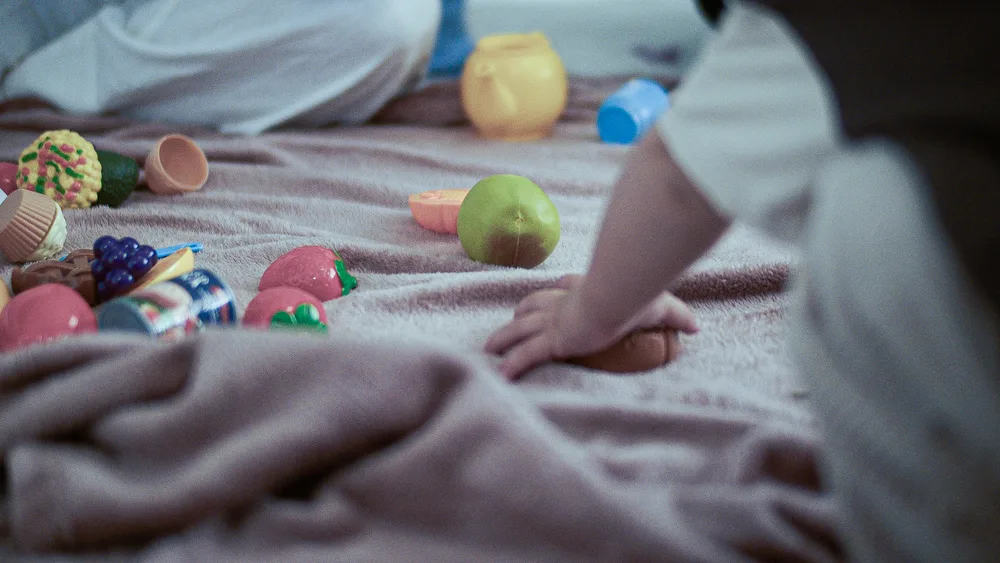
Sensory regulation is the state where your nervous system is filtering the world well enough that you can focus, join in, and cope with small surprises. It is one of the most used and least explained phrases in occupational therapy, so here it is in plain language. This is education, not advice about your specific child. Every sensory system is its own weather pattern.
What regulation actually is
Your nervous system takes in information all day. Sound, light, touch, movement, the feeling of your own body in space, the tag in your shirt, the hum of the fridge. Most of the time it filters and sorts all of that in the background, and you get on with your day. Regulation is the name for the state where that filtering is going well. You feel settled enough to focus, to join in, and to cope with small surprises without falling apart.
Adults do regulation work constantly without naming it. The morning coffee. The leg jiggling under the desk. The sunglasses. Stepping outside for air when a meeting runs long. Nobody calls that therapy. It is just a nervous system quietly looking after itself.
When the filtering is harder
For some children, and some adults, the filtering is harder. Some nervous systems take in too much, so an ordinary classroom feels like standing inside a blender. Others take in too little and go hunting for input, which can look like crashing, spinning, chewing, and climbing the furniture at exactly the wrong moment. Neither of these is bad behaviour. It is a body working hard to get the input it needs, or to escape the input it cannot handle.
What helps, in practice
This is where the body-based part of my work comes in. I spend time noticing what a particular child's system is seeking or avoiding, and then we build the day around that knowledge. More movement before sitting still. Heavier work for the child who craves deep pressure. Quieter pathways through loud places. Warning before transitions instead of ambushes. The tools are usually ordinary things, done deliberately, woven into the day the family already has.
What regulation is not
The one idea I would gently steer you away from is that regulation is a switch someone can install. It is a capacity that grows slowly, with support, at the pace of the nervous system doing the growing. The aim is not a child who never has big reactions. It is a child, and a family, with more ways through the moments that used to swallow the whole afternoon.
If your child's big reactions are leaving the household flattened, or you recognised your own nervous system somewhere in this post, a consult is an easy place to start the conversation. No pressure, and no blender.