When I tell families what Wild Springs does, I usually end up saying what I don't do first. I don't do tabletop OT. By that I mean I don't sit children at a desk with a stack of worksheets and exercises and call that therapy. There is a place for structured tabletop work in OT. It is just not where most of the regulation happens, and it is almost never where the children I work with actually engage.
What tabletop OT looks like
Tabletop OT is the model most people who have been through OT before have probably met. The therapist has a pile of resources, scissors and tweezers and pegboards, and runs through them in sequence. The child does or doesn't engage. The session ends, the parent is told what was tried, and the next session repeats with slightly different resources. It works for some children. It works for some kinds of goals. It doesn't work for most of the children I get referrals for, because those children are usually here precisely because tabletop hasn't been engaging for them.
What I do instead
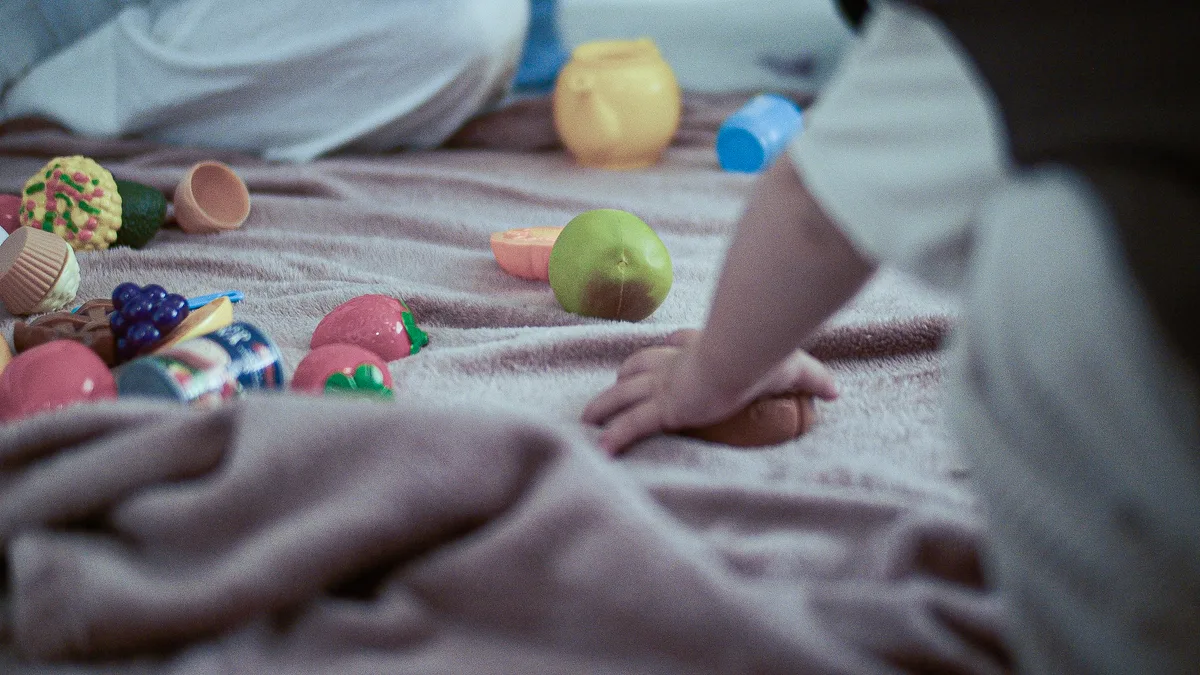
So I work from the child first. Session content is shaped by what the child is into. Movement, sensory regulation, outdoor play, building things, sometimes just walking and talking. We work towards goals the family and I have agreed on together, but the path to the goal looks different every time. Practically, that means sessions often happen on the floor, outside, on a swing, in the kitchen, or in a sensory bin. Sometimes at a table, when a table genuinely is the right tool for what we are trying to do. The table is a tool, not the venue.
Why child-led sessions work
When the session is built around the child's interests, the regulation work tends to happen almost in the background. The child gets to feel competent. The parent sees what regulation actually looks like for their child, and can carry it into home. And the child wants to come back, which matters more than it sounds, because consistent therapy tends to build on itself in a way stop-start therapy doesn't. Tabletop OT isn't wrong. It is one tool in a much bigger kit, and it doesn't deserve to be the default.
If you have tried OT before and the tabletop pattern is what your child bumped into, and they bounced, this is the kind of practice I built Wild Springs to be.